Be sure to watch this not too long “mockumentary” that is really quite good! Narrated by Jeremy Irons.
The Majestic Plastic Bag from Heal the Bay on Vimeo.
Be sure to watch this not too long “mockumentary” that is really quite good! Narrated by Jeremy Irons.
The Majestic Plastic Bag from Heal the Bay on Vimeo.
This week marked the 17th anniversary of the UN designated World Water Day. Here are some little known tidbits I’ve gathered to honor it.
This is my fourth year participating in Earth Hour. Last year millions of people turned off their lights from 8:30 to 9:30pm; what had started in Australia as a civic event has spread across the globe.
Just think of this: for one hour, millions and millions around the world are nearly simultaneously focused on the planet by the act of turning off their lights. This act of energy expenditure reduction creates an intense sweeping global wave of conscious energy–do we even know what that means?
I’ve always thought of the internet as a stepping stone in human development. Earth Hour has become a global event because of our growing interconnectedness and our very human self discovery.
Charles Moore is on his 10th trip to visit the Pacific Gyre–the spot in the Pacific Ocean that holds a growing island of plastic trash caught in its currents, previously written about in this blog here and here. A good article today in the New York Times explains what Mr. Moore has been doing since his first trip in 1997, when he accidentally stumbled upon this phenomenon. His work and that of others has inspired some of the rich and famous to get involved, namely Ted Danson with his Oceana project and David de Rothschild, whose brainchild the Plastiki Expedition he created when he read a 2006 UN report on trash in the oceans.
The issue of plastic in the oceans seems to be growing in the public awareness, although can any of us say that something has really changed? When one thinks about the enormous usage of plastic, not only here, but throughout the developing world, it is difficult to see a solution to what may be an insurmountable problem. The plastic doesn’t just float and somewhat degrade into smaller and smaller bits, it is ingested by sea creatures and travels up the foodchain. It is also becoming evident that our casual and regular use of plastic in water bottles and food packaging may be having an insidious effect on us as chemicals leach into our bodies. Nicholas Kristof of the New York Times says tellingly that he has confronted extreme African poverty and disease, as well as dangerous warlords but is frankly terrified of the growing amount of bisphenol A or BPA accumulating in his tissues.
One day we may look back on our Plastic Period like boomers on the days of thalidomide babies. While I am not advocating that we all go the way of “No Impact Man” , I am heartened that there is some serious research being done to study the causes and effects of what may become known as our “Plastic Period.”
Say what?
Imagine a world where health insurance companies insist that school lunches be healthy and fresh, made with local foods and where the American Medical Association puts its full political weight behind a ban on soda advertising.
Imagine that these same players start taking a strong interest in this country’s agribusiness and poise themselves to do some major damage to the subsidized interests in the next fight in Congress over the farm bill.
Believe it or not, according to Michael Pollan in his latest New York Times editorial, these events are not so far off and are the likely outcome of even the lightest version of health care reform to come–what he calls a “game changer.”
“Even under the weaker versions of health care reform now on offer, health insurers would be required to take everyone at the same rates, provide a standard level of coverage and keep people on their rolls regardless of their health. Terms like “pre-existing conditions” and “underwriting” would vanish from the health insurance rulebook — and, when they do, the relationship between the health insurance industry and the food industry will undergo a sea change.”
The moment the health insurance industry stops putting its energy and money into preventing health care reform, they will start to relearn what actually will affect their bottom line. Unable to drop people or deny claims we can imagine that they actually will be investing their money in reducing childhood obesity or championing against highly processed food with known cancer-causing chemicals.
If this actually comes to pass it will be remarkable. Our entire food system and health delivery system has grown into one of “perverse incentives”, although as Pollan says
“…food system reform has not figured in the national conversation about health care reform. And so the government is poised to go on encouraging America’s fast-food diet with its farm policies even as it takes on added responsibilities for covering the medical costs of that diet. To put it more bluntly, the government is putting itself in the uncomfortable position of subsidizing both the costs of treating Type 2 diabetes and the consumption of high-fructose corn syrup.”
What is remarkable is that both of these challenges–health care reform and that of agribusiness and the food industry–seemed to be so intractable. What a marvelous insight to set them against each other.
Michael Pollan is one of my heroes. Even if you have read “The Botany of Desire” you will enjoy the beautiful nuggets of wisdom he gives in this talk.
After cars, the food system uses more fossil fuel than any other sector of the economy — 19 percent. And while the experts disagree about the exact amount, the way we feed ourselves contributes more greenhouse gases to the atmosphere than anything else we do — as much as 37 percent, according to one study. Whenever farmers clear land for crops and till the soil, large quantities of carbon are released into the air. But the 20th-century industrialization of agriculture has increased the amount of greenhouse gases emitted by the food system by an order of magnitude; chemical fertilizers (made from natural gas), pesticides (made from petroleum), farm machinery, modern food processing and packaging and transportation have together transformed a system that in 1940 produced 2.3 calories of food energy for every calorie of fossil-fuel energy it used into one that now takes 10 calories of fossil-fuel energy to produce a single calorie of modern supermarket food. Put another way, when we eat from the industrial-food system, we are eating oil and spewing greenhouse gases. (My emphasis)
The famously conservative oilman T. Boone Pickens has launched an exciting and promising campaign to reduce America’s dependency on foreign oil. His plan is spelled out in the video below and his website is smart, straightforward and to the point. This bears some watching.
There are lots of issues with this little act: the average cell phone user is urged and enticed to upgrade their phone every year or so resulting in the necessary discard of the old phone. The major service providers make half-hearted attempts to provide envelopes for recycling, but my drawer is full of the family’s used cellphones because I don’t trust where they go. I’ve heard too many horror stories of American electronics waste going to third world countries where little kids are exposed to all kinds of hazardous metals as they take apart the discarded appliances. Okay, maybe I’m exaggerating; unfortunately, probably not.
Some more nasty facts: over 300 million printer cartridges are thrown away into landfills each year; over the next three years Americans will discard 130 million cellphones; Americans are 5% of the world population but they generate over 30% of the world’s trash.
Well, here’s the good news. I’ve always had affection for the US Postal Service (except for the junk mail they insist they must put in my P.O. box that I then toss into their paper recycling bin–a battle for another day) and now they have come up with a significant public service. Starting out in nearly a dozen metropolitan areas, the Post Office will now carry free mailer envelopes as part of a new Mail Back program for recycling small electronics and laser and inkjet printer cartridges. And this is recycling we can trust. The company paying for this is Clover Technologies Group, a company totally vetted and dedicated to zero waste to the landfill. In other words, they will retrofit, refurbish and resell whatever they can and totally take apart and recycle or reuse what they cannot sell.
If this works out, they will take the program across the country–imagine the potential impact from the one agency in contact with every home and business in America.
Imagine yourself independently wealthy. You buy yourself a yacht. You love the open seas. You become passionate about sailing and your life revolves around planning trips to exotic places.
Then something happens that changes your world.
Such is the story of Charles Moore, heir to an oil fortune, now environmental activist and founder of the Algalita Marine Research Foundation.
After designing his own unique racing yacht, Moore entered a Los Angeles to Hawaii race. It was 1997. Upon sailing home he willfully entered a part of the Pacific Ocean as a shortcut home, an area that is usually avoided by sailors and fishermen: an area of weak winds and weak currents and little fish that is the eye of a circle of currents thousands of miles wide called the North Pacific Gyre.
What he stumbled upon changed his life.
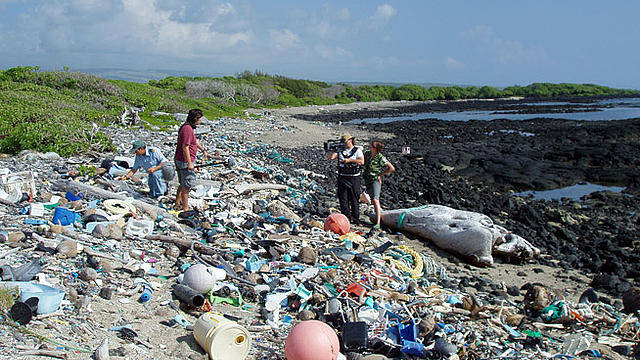
A sea–as far as the eye could see–of plastic debris–yellow Chevron oil bottles, tampon applicators, plastic bags, old fishing lines, shampoo bottles and Japanese traffic cones. He traveled for days through discarded plastics, miles after mile after mile.
I can only imagine his disbelief, his shock. When I first read about his experience, I too was shocked and wrote about it here. The ocean that he sailed because it was endless and pristine, was much like the wilderness that avid backpackers venture into to escape civilization –only to find the its ugliest remnants–trash.
In Moore’s words:
I often struggle to find words that will communicate the vastness of the Pacific Ocean to people who have never been to sea. Day after day, Alguita was the only vehicle on a highway without landmarks, stretching from horizon to horizon. Yet as I gazed from the deck at the surface of what ought to have been a pristine ocean, I was confronted, as far as the eye could see, with the sight of plastic.
Not a scientist himself, but with conviction and money, Moore founded the Algalita Marine Research Foundation in 1999 and built a network of chemists and scientists. He enjoined Curtis Ebbesmeyer, an oceanographer and leading authority on flotsam, who famously tracked the spill of 80,000 Nike running shoes on their way from China to the US. (the resultant wash-up on beaches throughout the Pacific allowed him to track and identify the behavior of currents).
Since this initial discovery and the funding of the Foundation, Moore has underwritten several trips to the area for further research. In 2001, according to the Marine Pollution Bulletin, they published that there were six pounds of plastic floating in the North Pacific subtropical gyre for every pound of naturally occurring zooplankton.
Most recently, after another exploration and research trip to the region, Moore acknowledges that the results are beyond imagination: the plastic soup he encounters is now–not the size of Texas as was noted in 1997. Not the size of the United States as noted in 2001. Now it is estimated, when one takes into account the “eastern” and “western” patches, to be double the size of the continental US.”
There are those who dispute his figures and Moore acknowledges that it is difficult to document the phenomenon. Satellite imagery is not able to pick up the plastic because it floats slightly below the surface and is largely translucent.
The “soup” is actually two linked areas, either side of the islands of Hawaii, known as the Western and Eastern Pacific Garbage Patches. According to a study released by Greenpeace, about one-fifth of the junk – which includes everything from footballs and kayaks to Lego blocks and carrier bags – is thrown off ships or oil platforms. The rest comes from land.
Ebbesmeyer, as “flotsam expert” portrays the North Pacific plastic trash cluster vortex as a living entity:
“It moves around like a big animal without a leash.” When that animal comes close to land, as it does at the Hawaiian archipelago, the results are dramatic. “The garbage patch barfs, and you get a beach covered with this confetti of plastic,” he added.
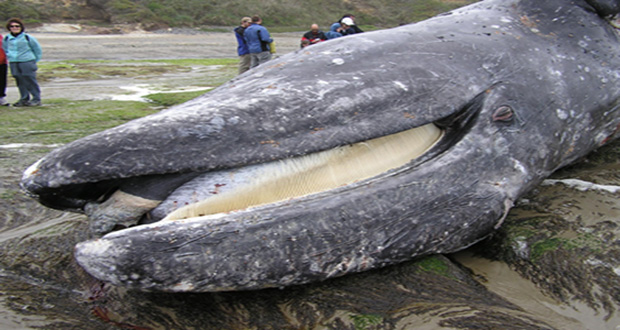
All this plastic breaks down but never goes away. Sunlight breaks the plastic into smaller and smaller bits, all ingested gradually into the food chain. Birds dive for the brightly colored plastic and sea turtles chase plastic bags like jellyfish.
“What goes into the ocean goes into these animals and onto your dinner plate. It’s that simple,” said Dr Marcus Eriksen, director of research and education.
This is our petroleum, our drilled and pumped oil, our endless ingenuity, reconfigured into new matter; matter causing serious consequences for our living on the planet.
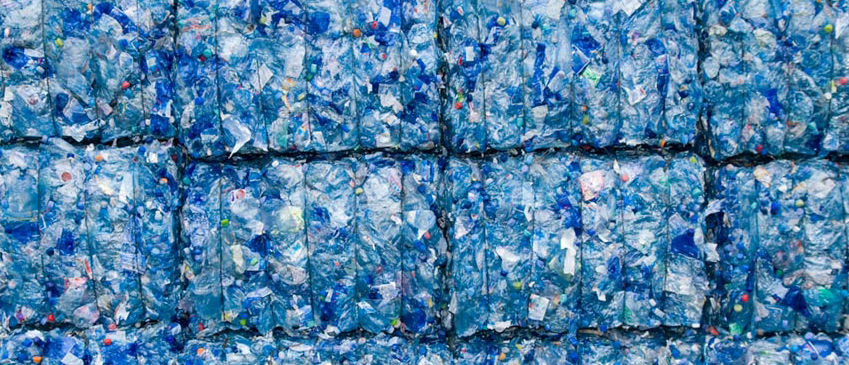
The annual production of plastic resin in the United States has roughly doubled in the past 20 years, from nearly 60 billion pounds in 1987 to an estimated 120 billion pounds in 2007, according to a study by the American Chemistry Council, which represents the nation’s largest plastic and chemical manufacturers.
So plastic is not going to go away. We can’t even do a massive cleanup operation to stop the damage. But we must start being aware of what we are doing. Remember that lovely video of the floating plastic bag in the movie “American Beauty”? Now picture that bag escaping the little whirlwind it was in as it begins its journey down the storm drain and out to sea.
“Oil is the raw material for most plastics manufacturing; oil was also the source of Moore’s inherited fortune.
“In a way, part of all this is remediation for the consequences of my grandfather’s life,” Moore says. “I guess maybe I need to make amends.”